Smart-Casual for Men: What It Means and What to Wear
What a smart-casual dress code actually asks for, the pieces that always work, five outfits built around a polo, and what to do when the invitation is vague.
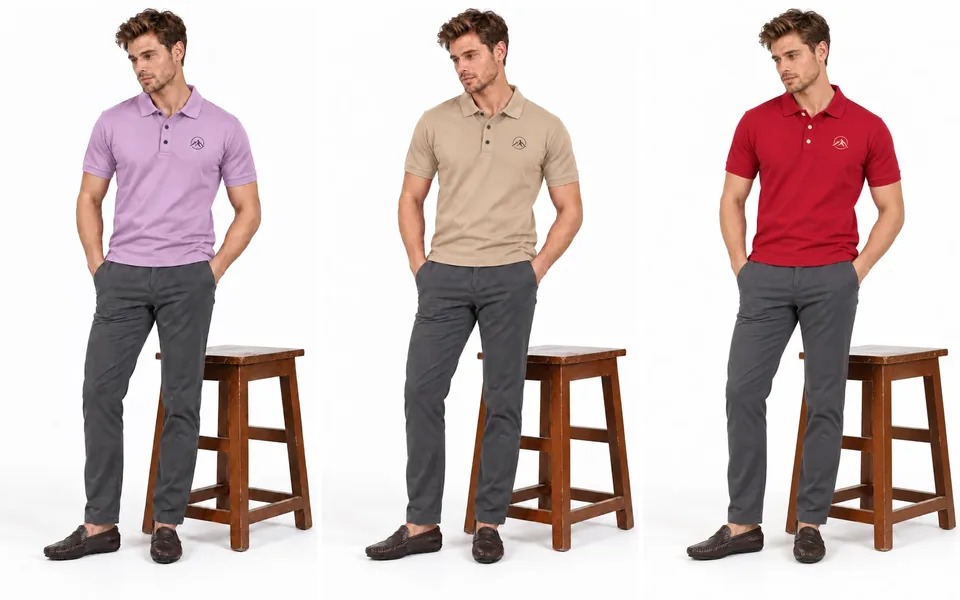
In short: smart-casual means neat, comfortable clothes that are clearly more considered than weekend wear but stop short of a suit. For most men that is a collared top, trousers that are not sportswear, and clean, proper shoes.
What "smart-casual" really asks for
There is no official definition, which is why the phrase causes so much doubt. In practice, hosts and employers who use it mean three things:
- Tidy. Clean, pressed, nothing faded or torn.
- Collared, or close to it. A polo, a casual shirt, or a fine-knit jumper.
- No sportswear. Leave the tracksuit bottoms, football shirts and running shoes at home.
The building blocks
Tops
A plain polo is the easiest smart-casual top there is: it has a collar, needs no tie and is comfortable all day. A casual button-up shirt works equally well. A plain T-shirt is only smart-casual under a jacket, and not everywhere.
Trousers
Chinos and tailored trousers are the safe choices. Dark, plain jeans without rips are accepted in many places, though not all — if in doubt, choose chinos.
Shoes
Loafers, plain leather shoes or clean, minimal leather trainers. In our own product photographs the polo is worn with charcoal trousers and dark loafers, which is a good picture of the smarter end of smart-casual.
Layers
An unstructured blazer, an overshirt or a fine-knit jumper lifts the outfit when you need it to, and comes off when you do not.
Five smart-casual outfits built around a polo
- Office day: a neutral polo, navy chinos, brown loafers and a belt.
- Client lunch: a polo tucked into charcoal tailored trousers, with a blazer.
- Dinner out: a darker or stronger-coloured polo, dark jeans and leather shoes.
- Family occasion: a lighter polo, beige or stone chinos and loafers.
- Warm-weather event: a polo, lightweight trousers and canvas or leather slip-ons.
For more combinations, see how to style a polo shirt.
Choosing a colour for smart-casual
Quieter colours are easier to get right. Of our four polo colours, beige and lavender suit an office most readily; red and mustard yellow are stronger and work best with plain, dark trousers.
Common mistakes
- A poor fit. A polo that is too tight or too long undoes everything else. Use the checklist in how a polo shirt should fit.
- A curled or crumpled collar. See how to wash and store polo shirts.
- Sports shoes. Running shoes pull the whole outfit back to casual.
- Too many statements. One strong colour or pattern is enough.
If the invitation is unclear
Dress slightly smarter than you think you need to. You can remove a jacket or open a button; you cannot add a collar you did not bring. And it is always acceptable to ask the host or your manager what people usually wear.
Frequently asked questions
Is a polo shirt smart-casual?
Yes — a plain polo with chinos or tailored trousers is one of the most widely accepted smart-casual outfits.
Are jeans smart-casual?
Often, if they are dark, plain and in good condition. Some workplaces and venues still exclude them, so check if it matters.
Do I need a jacket?
Not usually. A jacket moves an outfit towards the smart end; a polo and good trousers are enough for most smart-casual settings.
Should the polo be tucked in?
Tucked looks sharper with tailored trousers and under a jacket; untucked is fine with chinos or jeans if the hem is not too long.
What is the difference between smart-casual and business casual?
The terms overlap and are used differently from one workplace to another. Business casual usually leans a little smarter — a shirt or polo with tailored trousers — while smart-casual allows more freedom, such as dark jeans.
Looking for a polo to start with? See the Mountain Explora logo polo or browse the collection.